
How to teach children to use technology correctly if this was not the case when you were a child?
Translation of the article “Children’s Exposure to Digital Technology Causes Parental Anxiet” Kim Flaherty And Kate Moran.

Summary: While parents in America are concerned about making sure their children enjoy technological progress, parents in China are thinking about how to protect their children from technological madness.
How does technology affect today's children and their lives?
In the Life Online study, we surveyed more than 100 parents from 6 different cities in different parts of the world. We listened to all their concerns and fears and asked: how do their children join the modern technological environment?
Today our children are growing up in a digital universe, among smartphones, tablets, computers, quadcopters, virtual and augmented realities; in one way or another we all come across technology every day. In a short period of time, we have invented many incredible devices, but we have absolutely no idea how they will affect the future, including the lives of our children.

What are parents worried about?
Parents worry about everything from health to social-cognitive skills and the future social status of their child. They don’t know whether communication on the Internet will harm their child or help them succeed in school among their peers and become a little more successful in life.

They fear that a world with digital screens and electrical devices will reduce people's physical activity.

And finally, they are afraid that by allowing children to use digital devices, they cease to take part in the process of raising a child and shift this burden to soulless machines and algorithms.
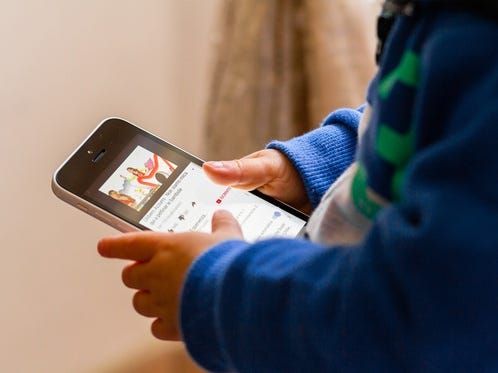
In the USA and Canada, the main emphasis is not on prohibition, but on minimizing the negative effects of technology on children, for example:
• Decreased social skills
• Decreased alertness and concentration
• Decreased adaptation to society
• Loss of self-identity
A Toronto mom is concerned that her boy looks autistic when he looks at his cell phone.

“If you need to puzzle a child and you don’t want to come up with anything, you can just give him an iPad, but do you really think that this method should always be used? Yes, there are definitely cases when you can use this method and give your child a tablet for 30-60 minutes... but in such cases, try to ask questions about what you watched or turn on educational programs for your child.”

Usually, another root of problems lies in time management. Some people do not control their own time spent on a computer or other digital device, but try to limit their children’s time (of course, unsuccessfully).

A mother of two first-graders says, “If I can’t control how much time I spend on the computer, how can my daughter do it?”
Another important concern of parents: “A child who is accustomed to a dynamic show shown to him by a tablet will then not want to listen to any school teacher, since it will be more boring than constantly changing pictures and images on the screen.”

Some parents are concerned that online gaming and watching videos is destroying their children's social skills, making them outcasts, so they ban YouTube and Twitch for their children.
Many parents are concerned about the balance between the virtual and real lives of their children.
Sections, clubs or physical exercise can be more beneficial than sitting in front of a computer screen after returning from school.

Some parents specifically force their children to use the tablet only as an electronic primer or encyclopedia, setting restrictions on all other services and applications.
Golden mean
“On the one hand, tablets make us withdrawn, stealing our time and attention, on the other... My daughter, who is two years old, already knows the alphabet! When our friends ask us: how did you do it!? I answer — it’s all a tablet. My six-year-old child already knows everything about the structure of the Earth, about many other planets, such as Mars, and can tell how many rings each has. We didn’t teach him this... it’s all a tablet. But sometimes, we arrange rest days and go to the dacha to pick apples, giving up any electronic devices.”
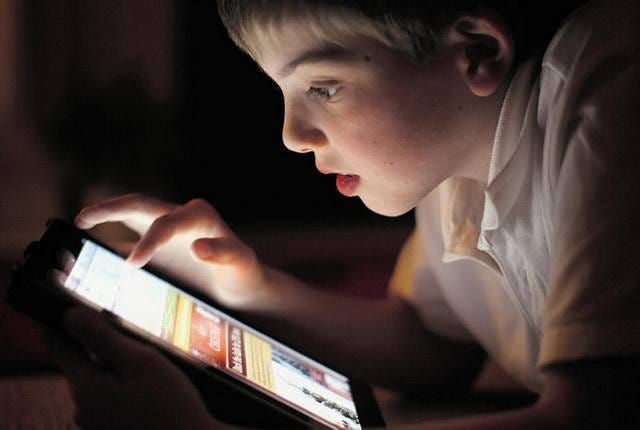
A young Toronto mother decided to limit her child's screen time after the toddler crawled up to the supermarket TV and started swiping across the regular screen, hoping to change the picture.

Parents in China have the following views:
“Technology is a blessing and a great responsibility. We must act as guides and guardians for our children, helping them discover new and interesting things, but also remember to monitor their screen time.”
Control and influence strategies
Parents who decide to limit the use of gadgets for their children use a variety of options.
“I don’t want my child to carry a phone and play with it. The phone is only needed for emergency calls.”
Some parents give their children devices with restrictions and only allow them to play as a reward for some other activity (like doing homework or cleaning the house).

Another Mom gave her daughter an iPhone that wasn't connected to the internet so her child could listen to music, use offline language learning programs, and make regular calls.
Nowadays, most modern smartphones and tablets already have a “children’s mode”; this will not surprise anyone.

In China, some parents prohibit children from using gadgets and playing computer games until they enter high school.

The Chinese government also monitors the gaming industry.
One of the mandatory requirements for a product to enter the Chinese market is the presence of built-in game controls for the time the player spends in the game.



Some games in China require you to enter a personal user ID to control the total play time and the content that can be shown in the game to a child of a certain age.

In America and Canada, children are usually technology experts and very often the children themselves provide technical advice to their parents.

Some parents ask their children to help them connect to Wi-Fi in the house. One mom needed her six-year-old's help to project her computer screen onto her TV using Apple TV. The same mom said, “They need to be tech savvy, obviously. And my 9-year-old daughter just seems to know how to figure these things out, she just has a thing for solving these kinds of problems [with devices and technology]. It amazes me, I honestly don’t know where this comes from.”
Conclusion
We live in hyper-technological times.
We achieved this in a super short time and while we were enjoying the delights of progress, it formed a new vector of life and created many contradictions that need to be resolved as quickly as possible.
Funnel: the feeling of pleasure we experience when a couple of swipes separate us from food, groceries and clothing ordered at home, instead of the possible physical strain we had to endure to get our food or clothing.

Filling the silence: People started using gadgets to fill free time and “empty” moments in their life.
On trains, on trains, on planes, in waiting rooms, at work, at school... the phone has become an everyday source of distraction for our attention. A rattle against boredom.
Digital life sometimes takes precedence over everyday life, plunging us and our children into the abyss of loneliness and imaginary society (chats, communities, groups).
We are getting closer virtually, but further apart physically. This changes the way we and our children live, affecting our health and productivity. Communication via the Internet is more like business communication; it does not at all convey the emotional reactions and experiences of the interlocutor, which we are able to capture during a personal meeting.

Please note that our study does not prove whether excessive use of digital devices actually harms children. Long-term and rigorous studies are needed to answer this question, since any negative effects appear over time and not during a single observational moment. [Scientists have found that gadget displays can accelerate the aging process]
Our research has shown how children use gadgets today, and this causes conflicting feelings and suspicions among many parents on different continents.
Therefore, it is very important to understand the concerns of parents when you are developing technologies or products for children.
A few key points to remember:
• Restrictions
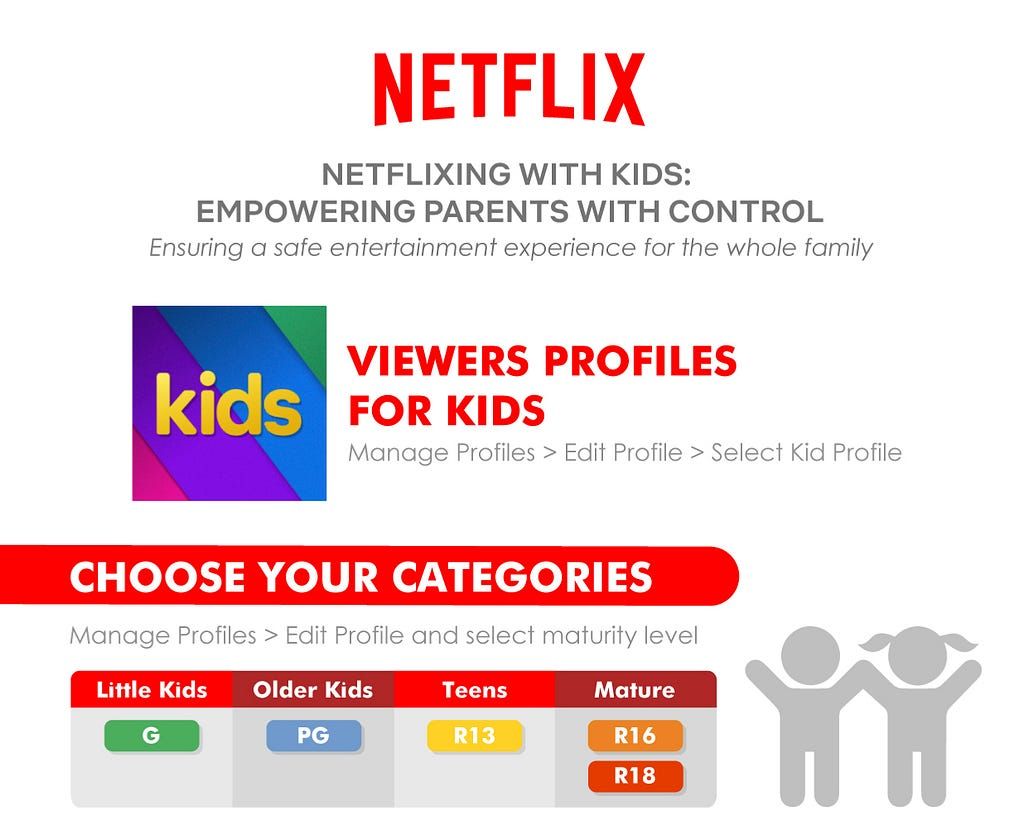
Try to think through and minimize the transition from content to the limited screen. Let it be less intrusive.
• Help parents
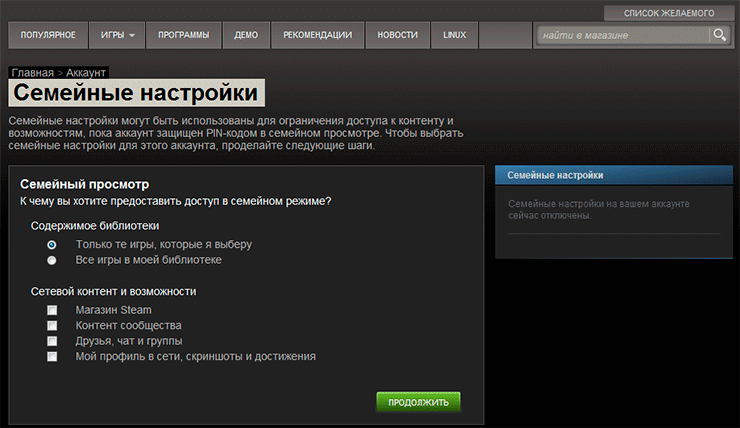

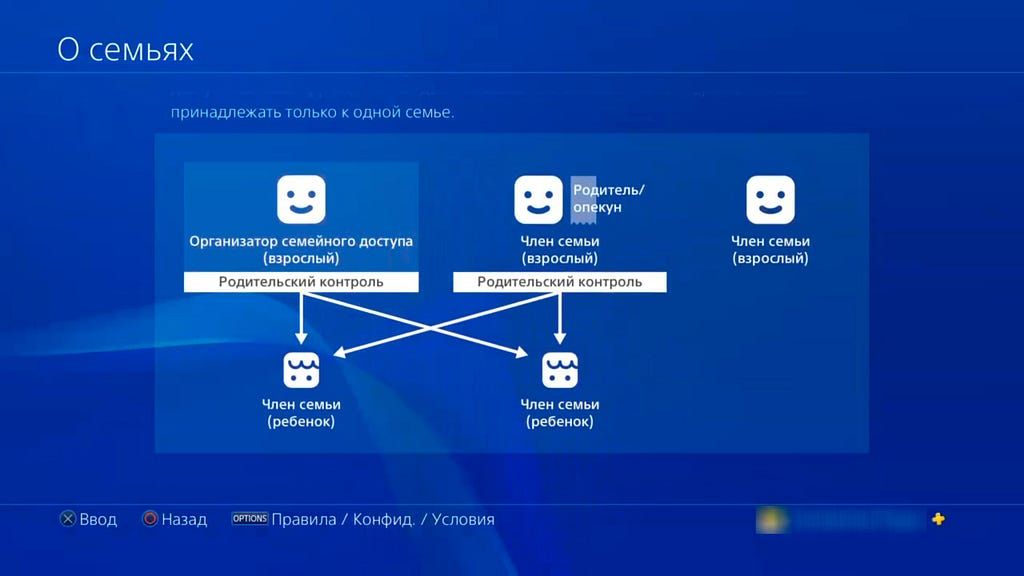
Help parents complete and customize the application for their children. You will make people's lives easier and relieve them of the need for constant monitoring.
• We are all children.
When you walk into a mall, you probably see children's corners and playrooms.
Many children, just like us, use the Internet, watch cartoons and listen to music, why not think about a separate children's design for your product, website or application.
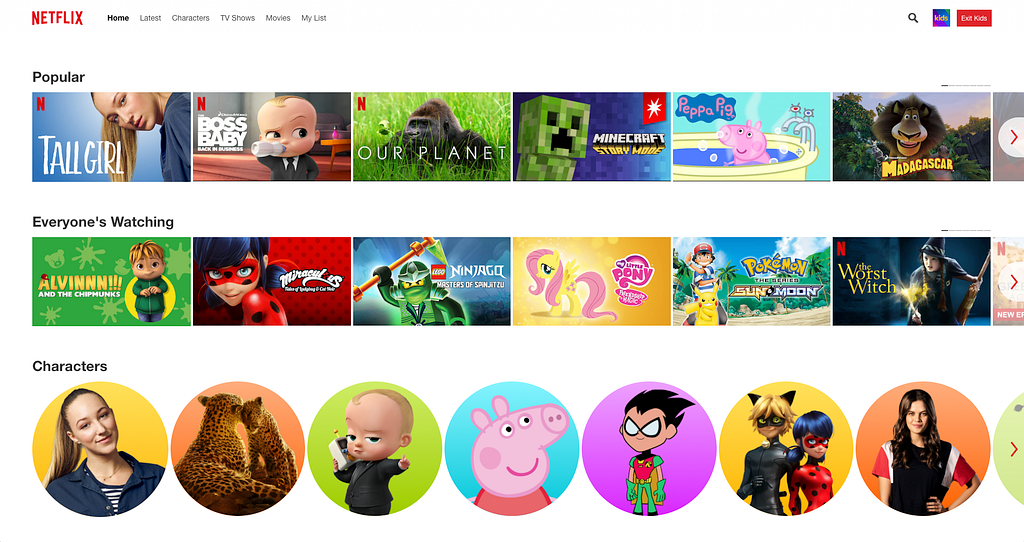

This is an important topic and if you are really interested, check out detailed research about the differences in adult and children's interfaces and their patterns.
Finally, remember that children follow the example of adults in everything.
What example do we set for children when their parents smile at their cell phone screens more often than at each other?