Why is it bad when the Internet knows everything about you?
I bring to your attention a translation of the article “The Dangers of Overpersonalization”
authors Kim Flaherty and Kate Moran

Result: Over-personalization of content leads to a homogeneous and indifferent user experience and can cause fatigue with your product as a whole.
In many ways, personalizing information benefits humanity. Internet users are so inundated with a wide variety of content that filtering by popularity and presenting the user with only the information that interests him can significantly reduce user effort and make the Internet much more productive and convenient.
At the same time, many users know that their every interaction on the network is monitored and analyzed. All this data is tagged and segmented to create individual profiles and selections for each customer (stories, products, advertising and news, movies, games...). But when does over-personalization become a problem?
In our research, we found several disadvantages of excessive personalization of information. In particular, one of the problems is that the user, by choosing the categories within which he wants to receive information, thereby “drives himself into a corner” and begins to receive only the information that he has previously determined for himself. However, people are often multifaceted and tend to change their tastes over time and under the influence of different circumstances. A system aimed at one specific user risks becoming boring or even annoying for another.
Accuracy or Relevance
The problem with personalization is the balance between the accuracy of the result and its relevance (IR).
Let's take information search as an example.
Precision is the percentage of search results found for the words you specify (what you are actually looking for).
Relevance is the percentage of all relevant results that are already known to the search engine (everything you searched for before this query, additional data about your location, and so on...).

If we talk about search engines, the ratio of these metrics allows you to get the best result and find exactly what you need at that particular moment.
Since its inception, the Google search engine has focused not on accuracy, but on relevant (personalized) information, which allowed them to stand out among competitors. Searching through an almost endless source of data should be relevant, and should not force us to independently understand every result that could potentially be useful to us.
Likewise, many digital products also prioritize relevance over accuracy—trying to make sure that the recommended content is definitely relevant to the user. As a result, they strictly adhere to the information that they already know about the user (topics of interest, previously liked content, etc.). However, the same strategy that is great for search engines and finding the information you need is not at all suitable for building a social media feed.
For example, let's imagine a user who is browsing photos in a conditional service. Our user has two main interests - he loves cats and dogs equally.

Our invented service has 100 posts with photos of cats and 100 posts with photos of dogs (plus thousands of posts on other topics). Most likely, the user would like to see any of the 200 posts about cats or dogs, but as soon as he reacts positively to a post with a cat. The system will make recommendations for the user without any indication that he likes dogs. As a result, the user will receive a feed consisting entirely of photographs of cats.
We see that the user receives a very accurate, very relevant set of posts, but by doing so we deprive him of diversity. Ideally, he would like to see both posts about cats and dogs, but the application does not use its full potential and the user sooner or later loses interest in the content he is viewing. Moreover, this user would probably think that platypuses are the cutest animals on earth if he ever saw them. However, the bunch of platypus photos in the app will never be shown to our user.

Excessive personalization is dangerous for both organizations and users:
This approach focuses on users as one-dimensional characters rather than the complex, multi-faceted individuals that you and I are.
Homogeneous experience
We saw above that over-personalization can lead to a negative experience (in the context of a social network) and that it may only satisfy some of the user's many interests. But what do users themselves think about this? How do they respond to over-personalization?
State of fatigue
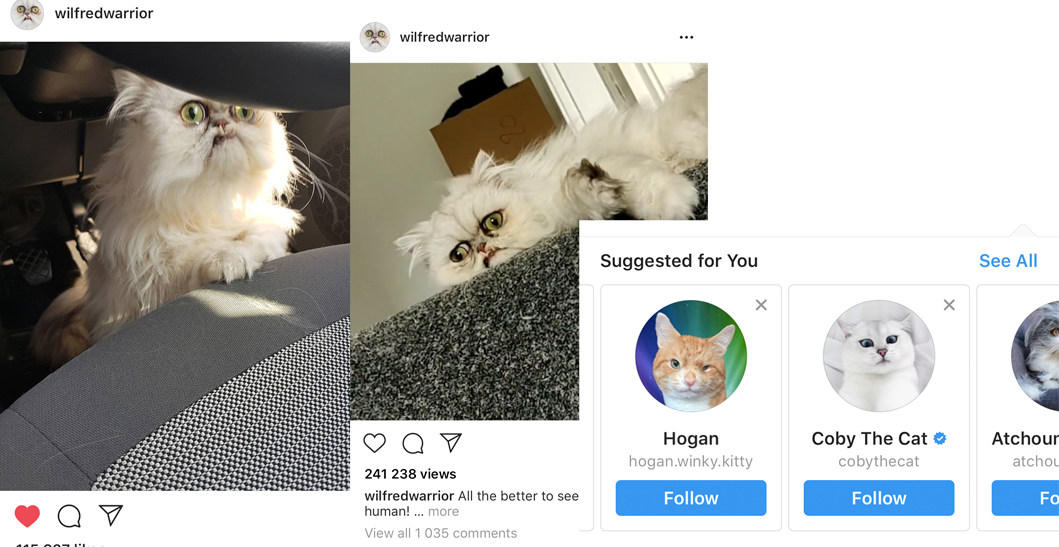
We [authors] start to get bored scrolling through our Instagram feed. All we see are cats and jewelry. Yes, we both love cats and jewelry, and Instagram certainly took that into account. Our interactions with these types of posts created a snowball effect. Most of the content that the platform algorithmically advertises to us fits into these categories, so over time our personal pages begin to become saturated with the same homogeneous content that we see from others. (Yes, Instagram has a special Discover tab where you can find something new for yourself... But to go to this tab, a person needs to make an effort on himself, and the content from this tab is in no way connected with your main feed).

Participants in our study expressed similar sentiments; In some cases, over-personalization causes users to lose interest in the app or abandon it altogether.
Some study participants in the United States scrolled through Instagram and Facebook without even reading the posts, explaining this by the lack of new and interesting materials in their feed.
"It's boring."
"Routine ritual in the morning."
“I see the same people on Facebook all the time; there is no doubt about it.”
One girl even noted that because the content in her feed had become boring, she kept scrolling in search of something interesting: “I don't find anything interesting on Facebook today, but the funny thing is, I'll keep scrolling until I find something interesting; it’s particularly addictive.”
This behavior is associated with the phenomenon Vortex, which means that people feel pulled into the online world almost against their will through sticky design techniques (such as the continuous streams of content that social media provides us with). Users seek an emotional response from good content. In these cases, the phone turns into a mini-slot machine: they pull the lever, encounter dozens of failures and continue playing in the hope of finally winning.

Several participants in our research in China for the Life Online project reported that they were active users of TikTok (a social network for sharing music and video) in the beginning: the content on the platform was really exciting. Some users said that they sat and watched videos for hours on end. But then at one point they got bored. Everything started looking the same, so they stopped using the app. “It's pretty much the same content posted over and over again. I have no particular desire to continue looking at it." - said one of the study participants.

Content fatigue due to over-personalization doesn't just exist on social media. In our study of recommendation systems, an Amazon user noted that she encountered outdated and boring product recommendations in the “Recommend for You” section.
While browsing the product strip, she commented: “Some of these things, like Argan oil, I looked at a few years ago... So it's not a very relevant recommendation for me now [...] My tastes have probably changed over the years. For example, I bought lactic acid 4 years ago and I don’t think this recommendation is still relevant for me.”

This example shows how analyzing user interests in a narrow segment can lead to recommendations that become boring and irrelevant. As our participant noted, interests tend to change over time. In addition, Amazon misses the opportunity to study customers' current interests and recommend new products to them.
Another user was browsing Amazon's Explore section and added a squid item to their cart... “I really liked squid and Amazon started showing me more things with squid […] that's the problem, if I'm looking for new cool things, my feed will be almost completely filled with squid. I don't want it [Amazon] to only offer squid, although I think squid is really cool."
It works much the same way as if you were a kid and told your mom that you like cats. After that, every Christmas, you would receive gifts that are shaped like a cat.

To summarize... personalized content can affect the user experience with your application and bore your users... and thus you will not learn more information about your users and will not be able to adapt the application to their new expectations.
Replicated Content
The same type of content you see on social networks like TikTok and Instagram is made worse by the fact that other users in the community create similar and duplicate content just to be included in the algorithm's results in pursuit of popularity.

Instagram has a profile that defines replicated content and similar techniques that users repeat after each other. For example, photographs with the same type of landscape and the same viewpoint or viewing angle. Although the photographs were taken at different times and by different users, they all look similar to each other. (@insta_repeat)

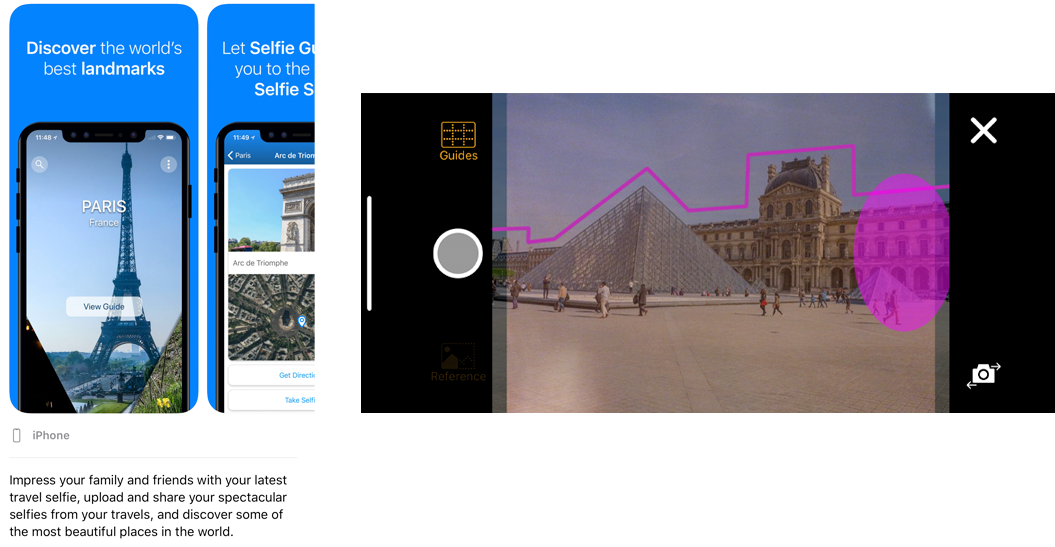
It's even gotten to the point where one Chinese user is deliberately planning to recreate some of the popular images on his upcoming trip to Paris. The girl looked at posts on Redbook that were made by other users in Paris. The photos inspired her to visit the same places, and she intends to recreate her favorite posts on her own account.
“I want to emulate the travel blogs I've seen on the Internet - I'll take pictures in the same place and in the same pose, from the same angle.”

Echo chamber
Another symptom of a hyper-personal, homogeneous experience.
An echo chamber is a situation created by forcefully targeted content that eats into our beliefs and is reinforced by seeing the same thing in our feed. The echo chamber effect fuels social polarization between people.
For example, on Facebook, people love to interact with content they like (like, share with friends...). Thus, over time, as the platform identifies a user's interests, the algorithm begins to show only those messages that are specifically intended for that user (or group of users). In this case, creating a world in which the user only consumes the types of messages that reinforce his beliefs and interests. People no longer see messages that challenge their beliefs or expand their viewpoints.

If every utterance is aimed at confirming our interests, we miss the opportunity to learn about other experiences. The result: in real life, people are divided just as clearly as in the virtual world.
Before we started receiving targeted content online, our communication consisted of discussing the same news and thereby creating a sense of community. Our worldview was formed by reading and perceiving the same information as other people and as a result people were more united. In March 2017, The New York Times announced that it would begin experimenting with personalized news for its online readers. This news has caused concern among many. People complained that they would not be able to share the same news and discuss the same stories that their friends and family had read.

The dark side of personalization
Personalization can easily intimidate you in some situations. While most consumers know that their actions are being tracked to provide them with better recommendations, this can become a problem when one action you take can trigger a wave of spam to your email or phone number.
We asked some of our Life Online research participants how companies determine what ads to show to users. Most users know that ads and other content have been personalized based on the user's previous actions. When a person searched for something on a search engine and then suddenly kept seeing the result of their search all over the web.
For example, one Chinese participant in our survey told us: “If I look at toilets on Taobao, information about household appliances is all over the place. The downside to this is that if I have already purchased an item, the ads will still appear. And I will be sad if I see a discount on an item I recently bought.”
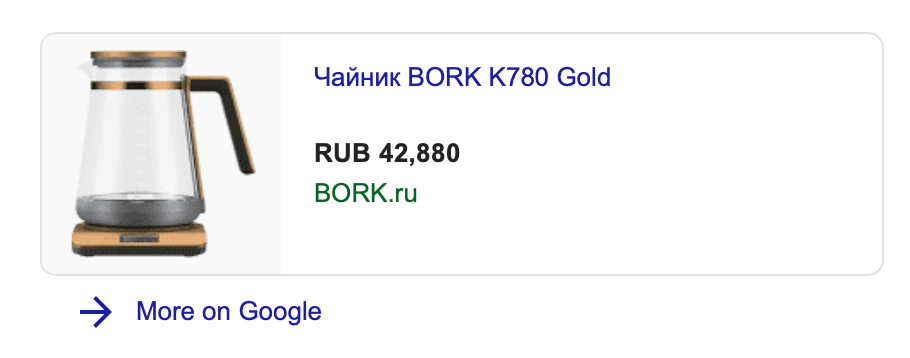
Most of our participants did not know how exactly sites transmit information about the actions of visitors to each other. Sometimes there were situations where it really felt like personalized content was pushing the boundaries of what they thought the site or devices should know about the user. This practice seemed particularly creepy.
For example, one of our study participants in China commented that she understands why she receives advertisements related to mobile applications on her phone, but when she is on a computer and receives information related to her recent activity on her mobile phone, it can be quite a shock. What's also scary for users is that Facebook appears to know and use data from a user's recent searches to Amazon and Google.
(While we're not against a single user interface system, sometimes it's worth limiting the user's expectations and protecting them from an all-knowing backend system.)
People are also afraid of information that is closely related to the user’s confidential information. For example, information about food or pregnancy, funeral preparations, or recipes for treating exotic medical illnesses shown to the user can evoke strong emotional reactions if they are shown out of context and relate directly to the user. Some online interactions should remain private or should be approached with caution.
How to Avoid Over-Personalization
Now that we have the technical ability to track, analyze and personalize down to the last detail the user experience in our products, it is clear that there is indeed a barrier between the desire for personalization and the significant disadvantages that arise from over-personalization. Perhaps it's time to take a step back and evaluate our options. Based on the pain points we observed in our research, we've put together several recommendations that companies should take into account to prevent mistakes related to information personalization:
Give customers a sense of control over personalization.