How steam becomes clouds
There is such a wonderful company calling itself Valve Corporation. And this company has always been famous for cool things technologically and has handled billions of dollars in capital.
But technically the company is stuck in 2006-2007.
And this is how it lived for itself in 2006, until competitors appeared in 2018, aiming to gobble up its market through more advanced and cheaper technologies. Epic Games Store the asshole gave the monopoly and lubricated the rusty gears.
The steam engine first redesigned itself, adding parallaxes and blurs to the old web skeleton of Steam, then dropped a couple of percent of tax deductions for developers, and recently (in 2021) it even announced that it would make its own game consoles.
I then figured out what it was Steam Deck, analyzed the marketing and extracted the message from there. He formulated what they actually want to sell to players.
A console advertised on hardware is a lost cause.
What has changed in 2022?
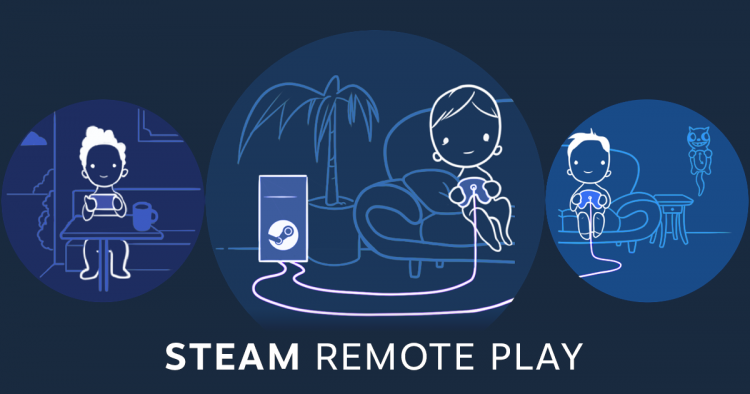
Almost a year passes, and Steam is rolling out the game in January 2022 without much fanfare. Remote Play technology. This is a thing that allows people to play one game together if at least one person has this game running on their computer.
And it seems that Steam Link technology already existed...
You launched the game, threw the picture and controls on the TV and went to play in another room, and the game was launched on your computer. What's revolutionary here?
Original picture: open source

The fact is that Steam Remote Play is an updated and modified Steam Link.
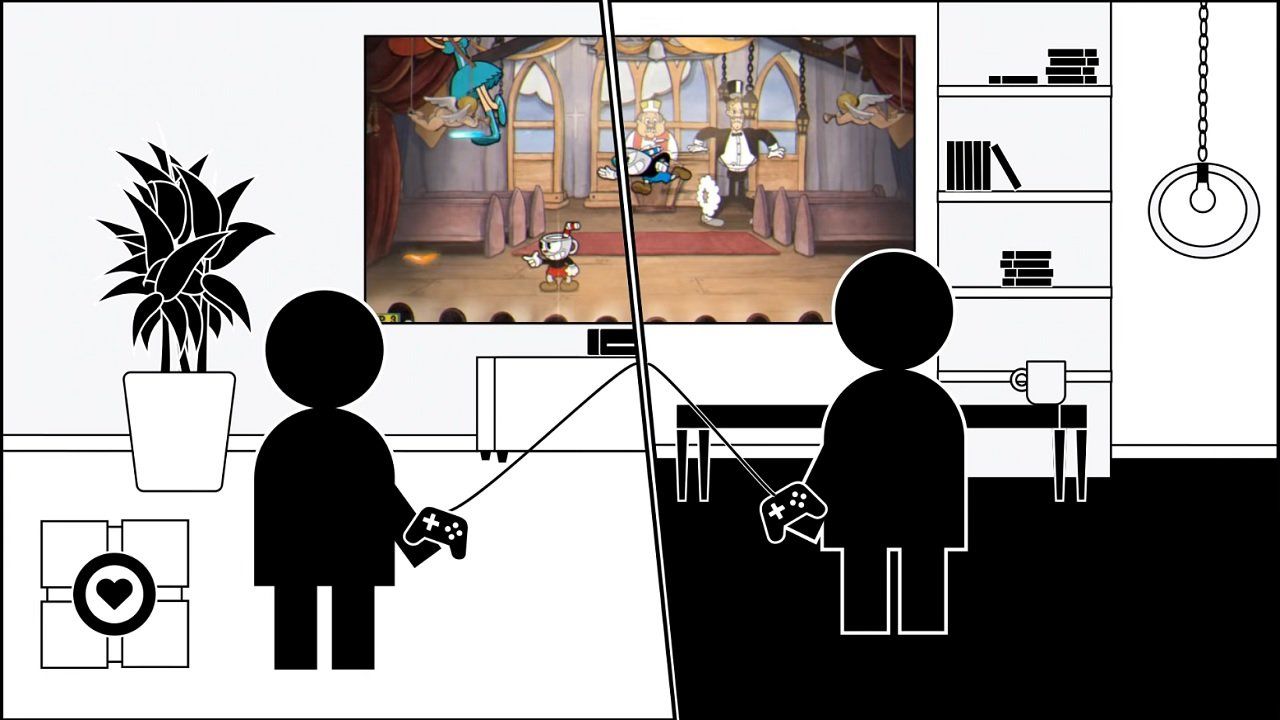
The game is launched by one person, after which Steam gives a link, which you can share with friends.
If a friend opens it, the same game will instantly launch on his computer, even if it is not purchased from the Steam store.
Moreover, as an ordinary gamer, I will not understand at all whether the game is launched on me or the game is broadcast, because the screen resolution will be adapted to my resolution, the controls will be in the hands of my friend, and the sound and synchronization will be at the same level as if the game was running on my native hardware.
In this case, control can be transferred to a second player, and some games can even be played by two people. Yes... the screen is divided into ratios and you play together as it was on the first game consoles.
What's important here...
1. The game is running on the host and he receives linkthat can be shared
People who join via the link do not need to buy the game, and theoretically there is no need to install Steam at all (!) Everything works through browser APIs. This is how Steam has evolved to the level Google Stadia
There are no delays in control; support for gamepads, VR and other USB/Bluetooth devices is also present.
2. The game can be launched not on the host computer, but on a cloud server
The load on the hardware in general is reduced and it becomes possible to connect to the game from weaker devices (for example, portable consoles Steam Deck)
3. A new level of interactivity in broadcasts
Games launched via the Steam Remote Play link can use sensors for interaction with the outside world (vibration motors, lights, etc.)
A different quality of immersion compared to Twitch.
At least, having used Steam Remote Play and played different games, I now imagine the technical potential of the new Steam console and it can shoot as high as no one has ever shot before.